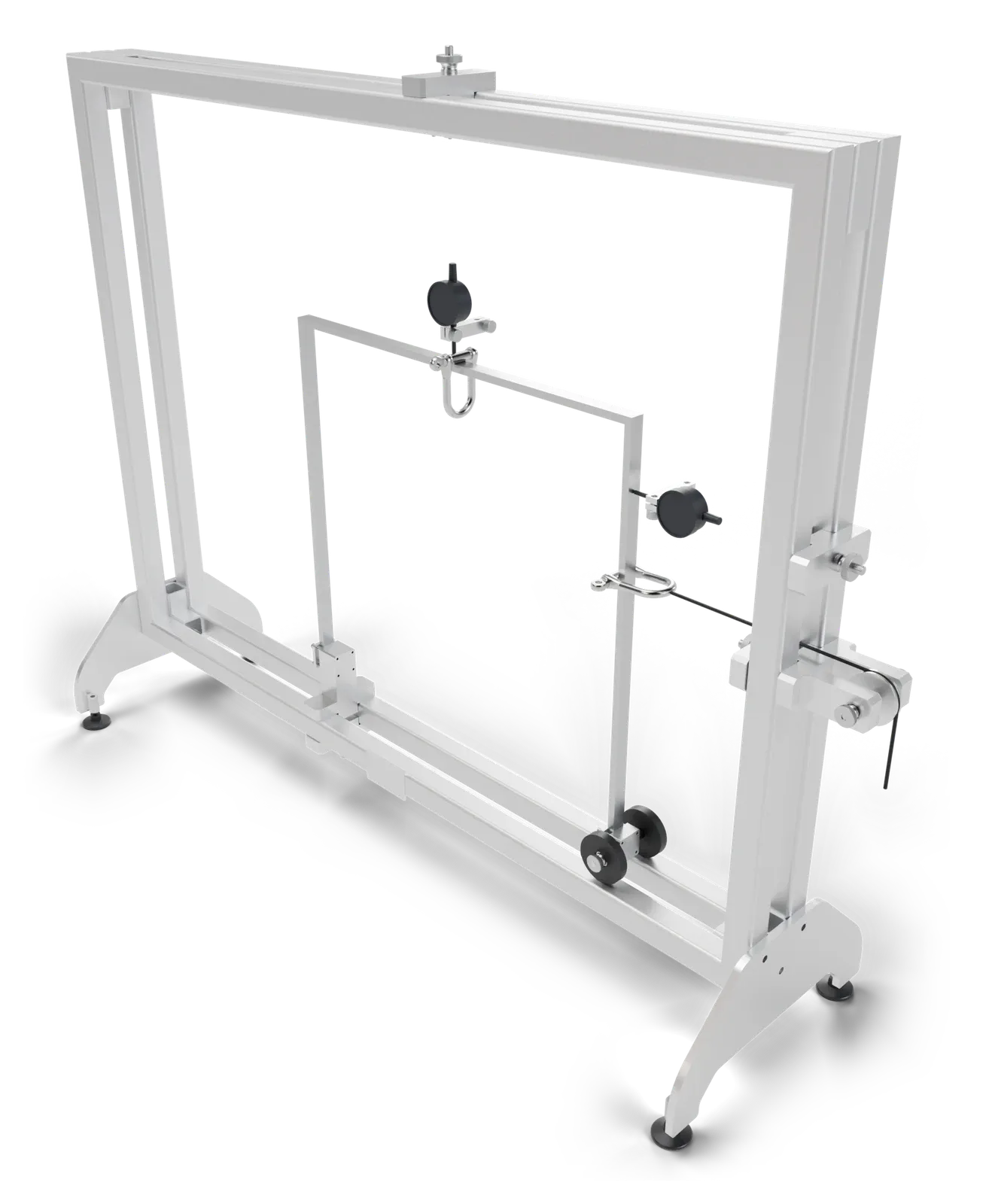
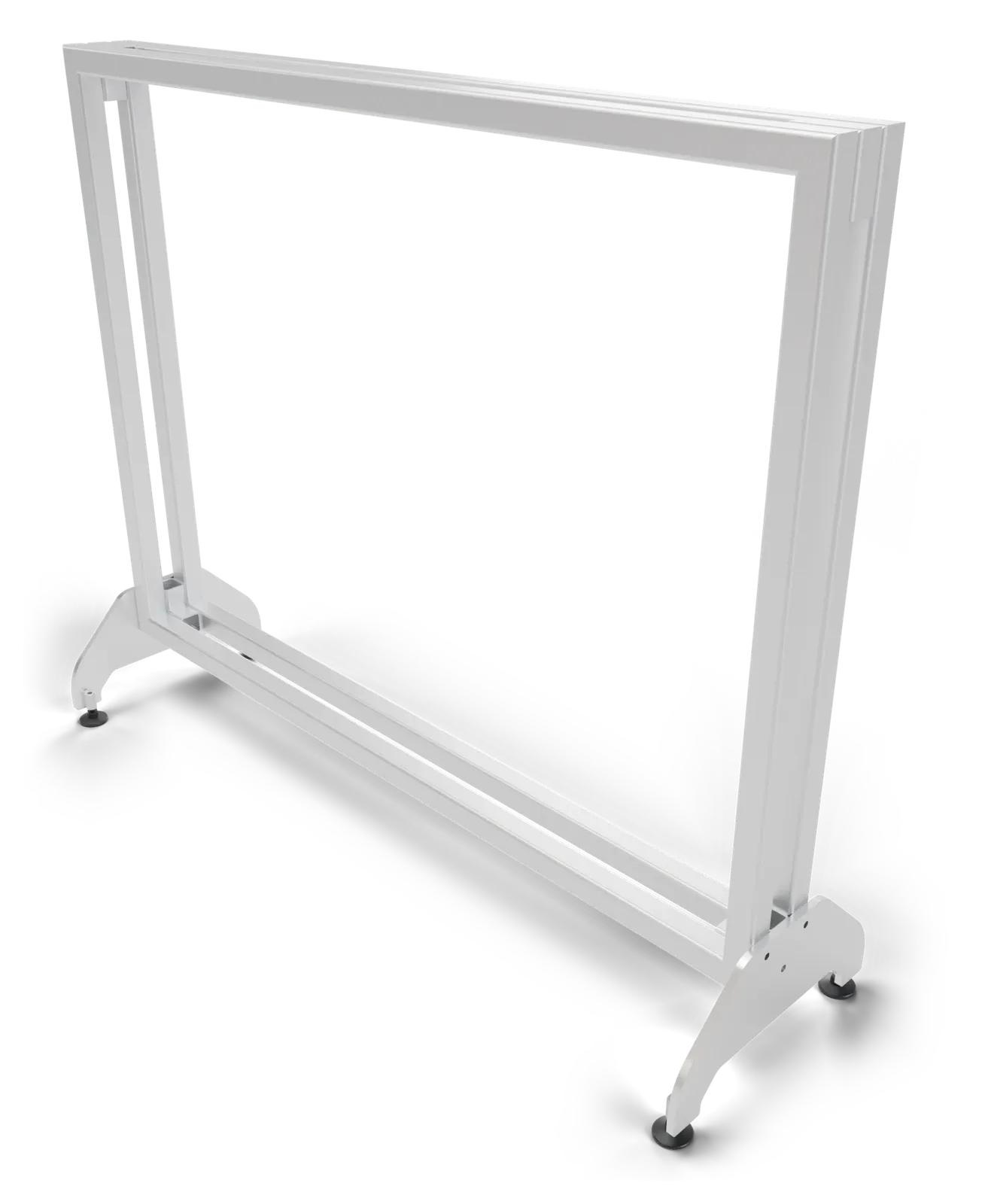
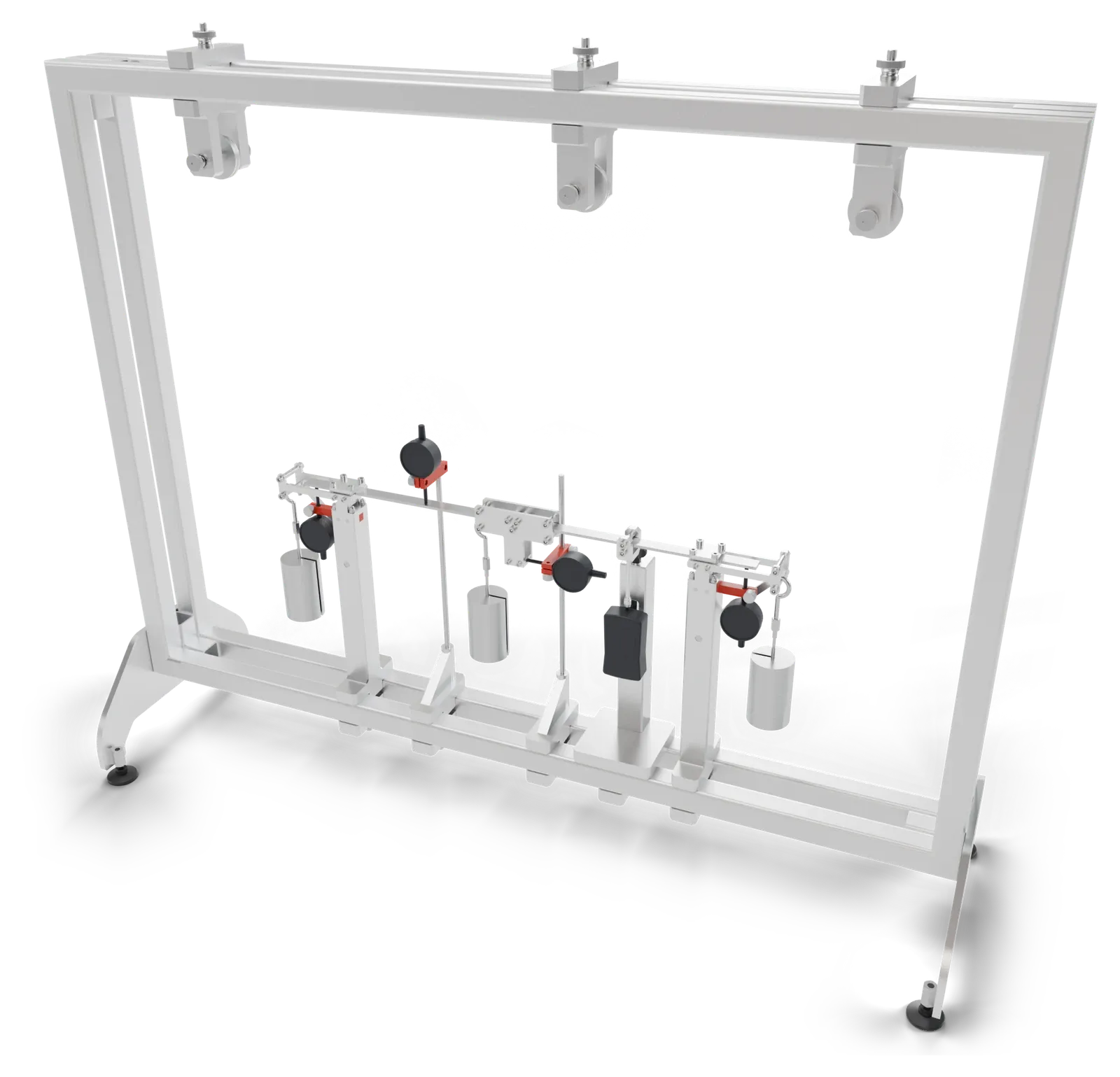
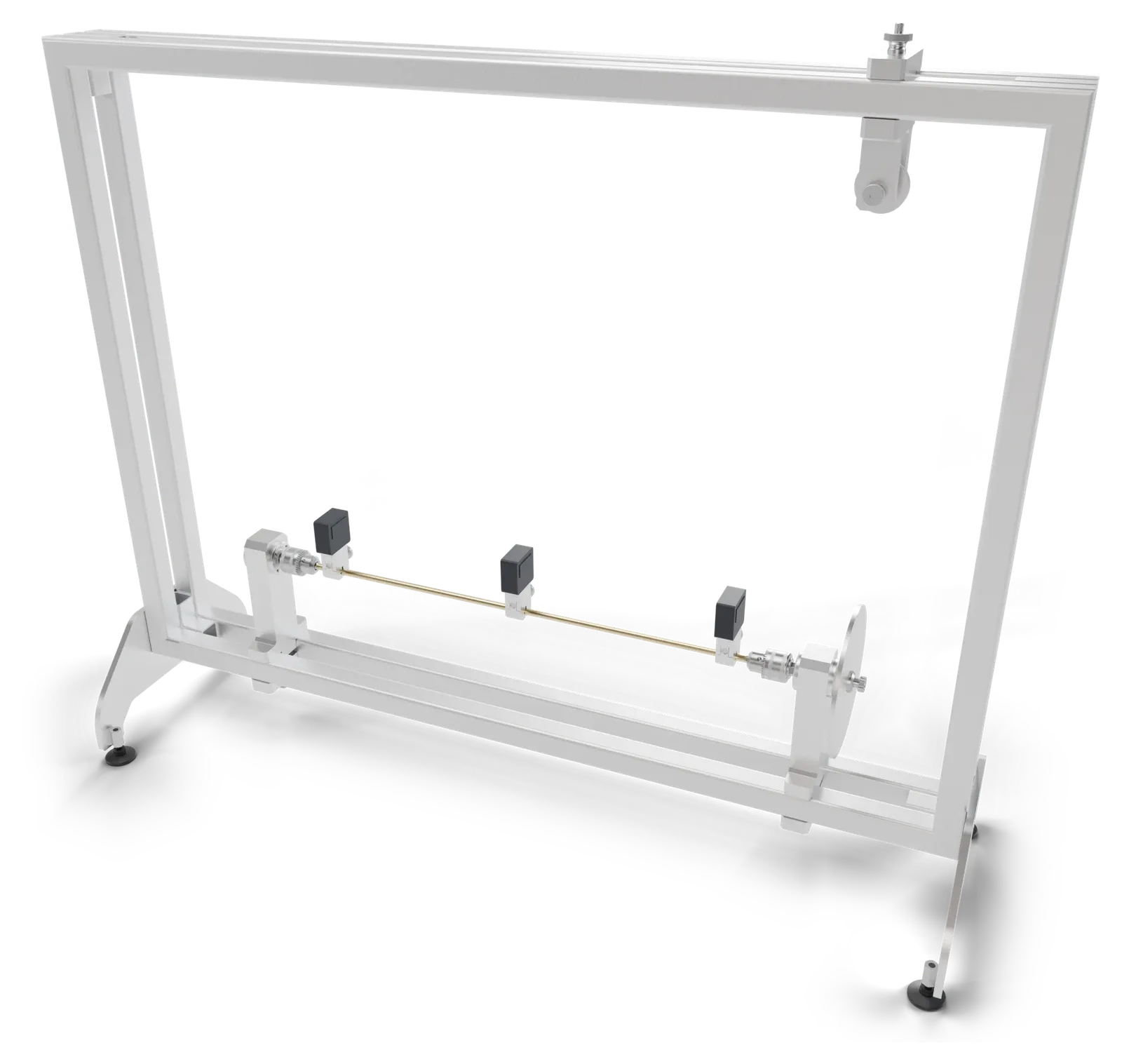
Experimental apparatus for the deflection analysis of statically determinate and indeterminate plane frames
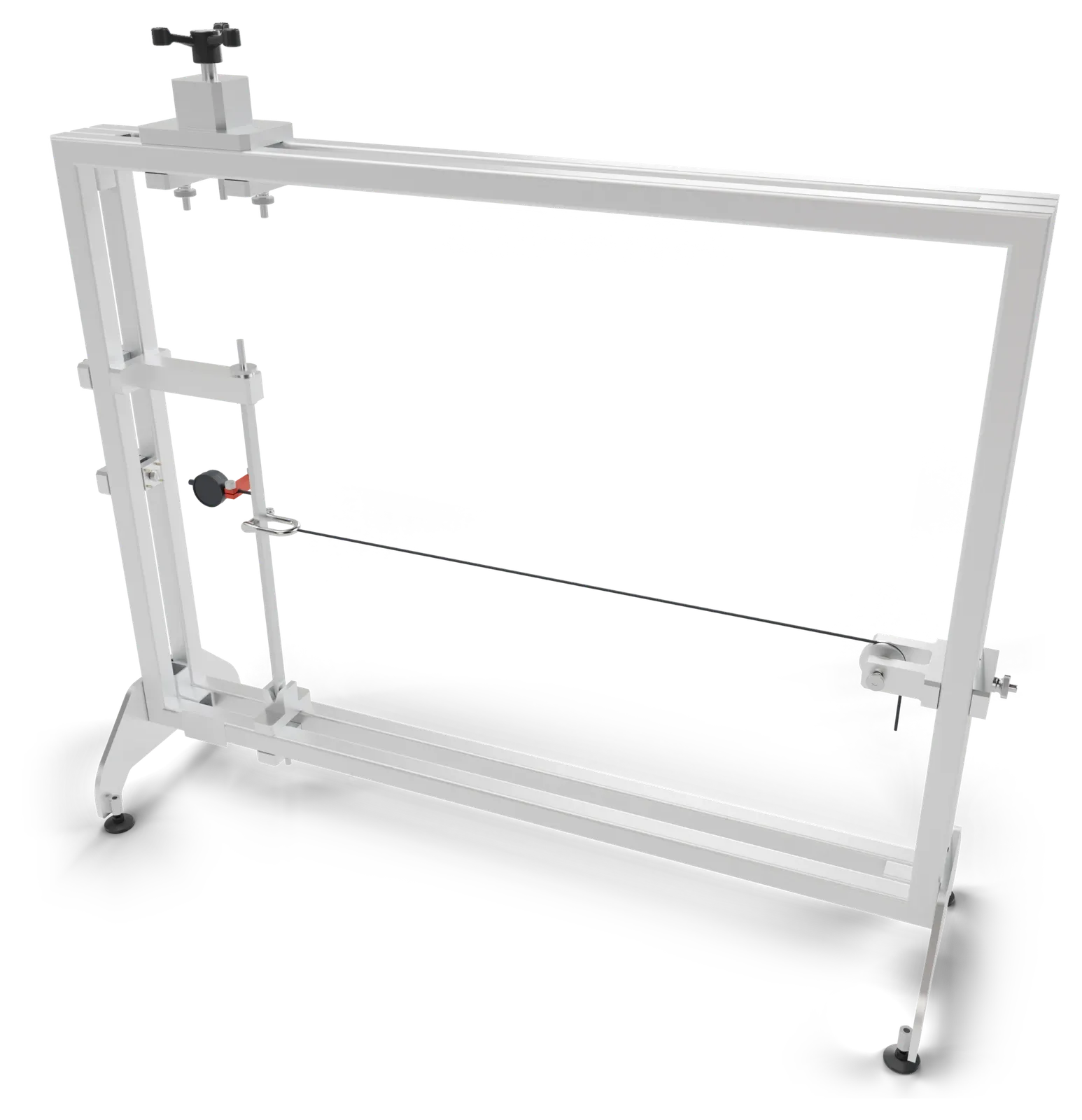
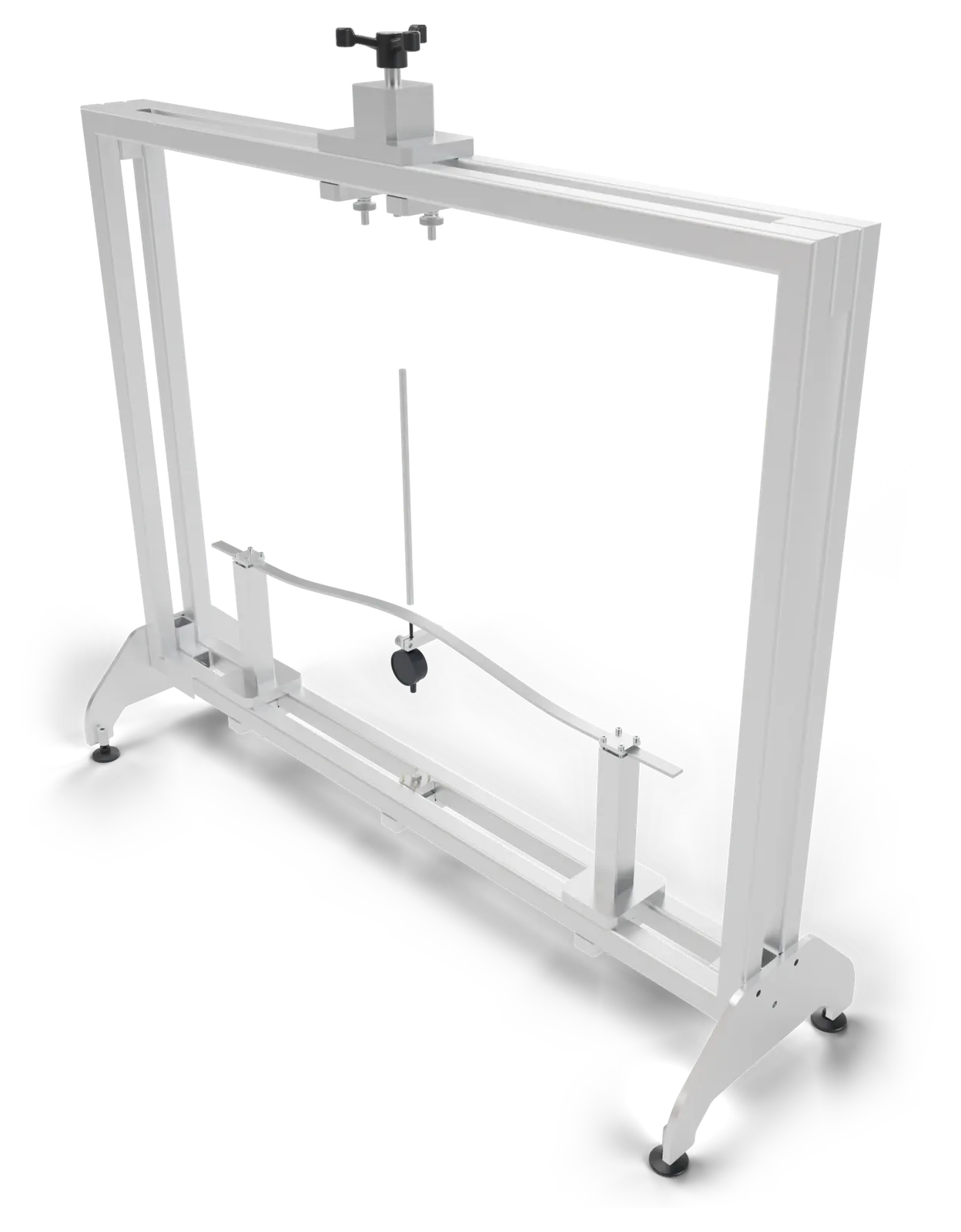
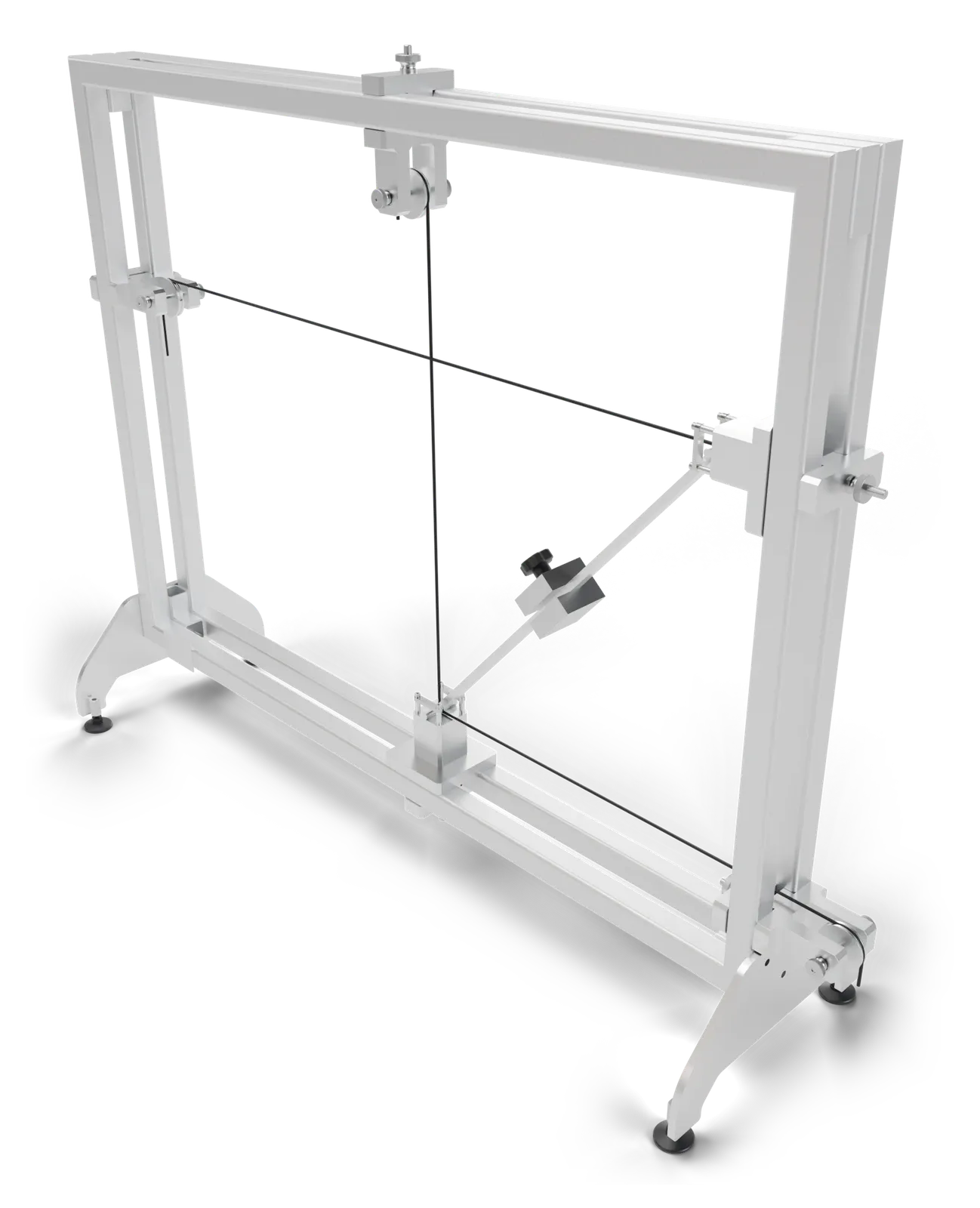
A rigid-cornered steel portal of either U-shape or S-shape is clamped at one end; the opposite end can be left free (statically determinate cantilever frame) or seated on a roller (statically indeterminate single-redundant frame). Point loads at arbitrary positions deform the frame; two dial gauges record the horizontal sway and vertical deflection. The apparatus gives the student a platform on which to apply first-order elastic theory, the principle of superposition and - above all - the principle of virtual work to compute both deformations and the redundant support reaction, then compare directly to the measured values.
Experiments
Elastic deformation of U-shaped and S-shaped frames under point loads
Statically determinate and statically indeterminate configurations
First-order elasticity theory - bending-moment diagram and elastic line
Application of the principle of superposition
Application of the principle of virtual work:
virtual-force method - for deformations
virtual-displacement method - for support reactions
Verification of the Maxwell-Betti reciprocal theorem
Horizontal thrust and side-sway in a portal frame
Comparison of calculated and measured deformations
Frames
Materialsteel, rectangular solid cross-section
Cross-section20 × 10 mm
U-shaped portaledge length 600 × 600 mm
S-shaped frameedge length 600 × 600 mm
Supports
Clamping pillars1 long + 1 short - for both determinate and indeterminate setups
Roller bearing1 - introduces the redundant constraint
Load hookmovable, positions along the frame
Measurement
Dial gauges2 × 0…20 mm, graduation 0.01 mm
Load set
Weights2 × 1 N hangers · 8 × 1 N · 6 × 5 N
34kg
Part of package
Fundamentals of Structural Mechanics
A complete set of experimental modules covering the core topics in strength of materials - elastic line, torsion, Euler buckling, frame deformation, plastic bending, and static equilibrium.